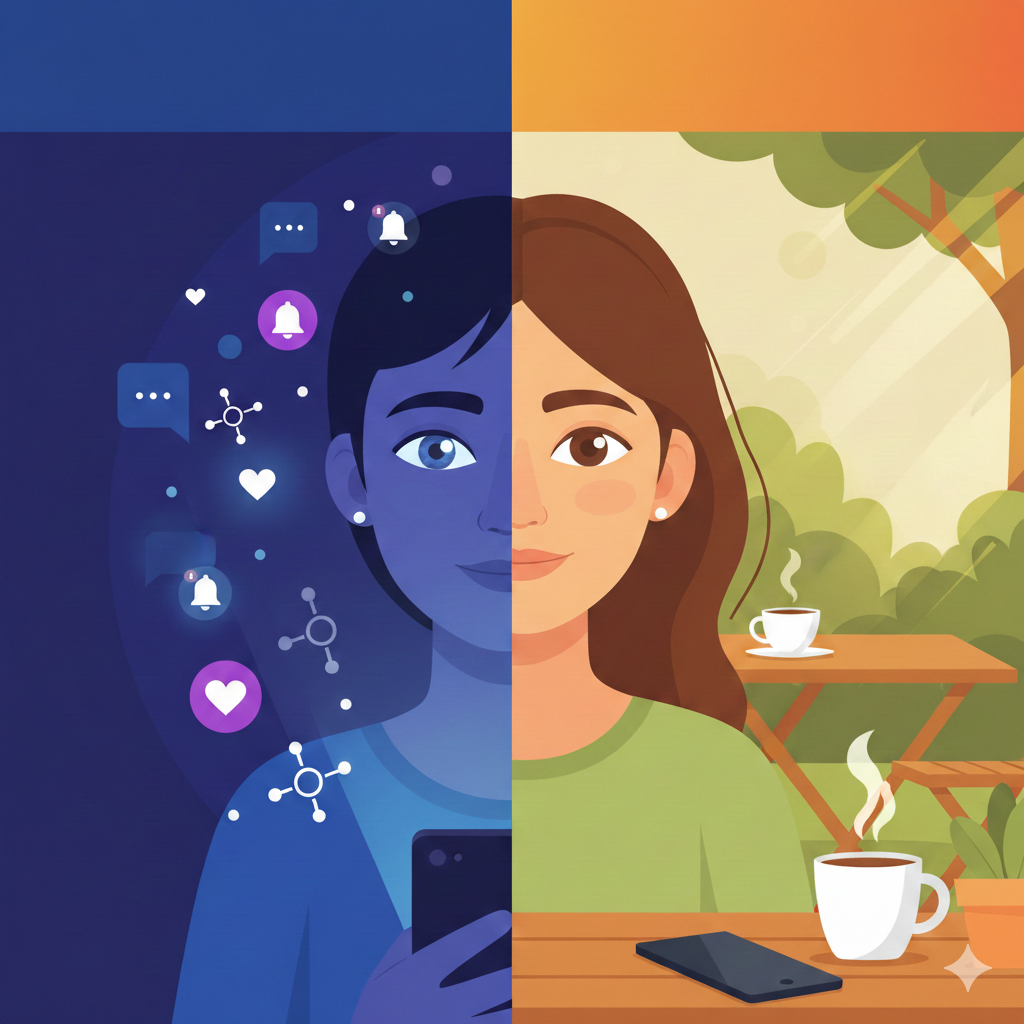
It’s 3 AM. Your bedroom is dark except for the familiar blue glow from your smartphone. You’ve scrolled past twenty cat videos, three conspiracy theories, and your ex-colleague’s vacation photos. A nagging voice whispers: “What was I supposed to be doing?”
Sound familiar? You’re not alone—and it’s not your fault.
According to recent studies, the average person checks their phone 96 times per day (once every 10 minutes). This isn’t a willpower problem. You’re caught in the attention extraction economy—a multi-trillion-dollar system designed to keep your eyes glued to the screen.
In this comprehensive guide, you’ll discover how tech companies exploit psychological triggers to capture your attention, why your smartphone works like a slot machine, and practical strategies to break free from digital addiction.
What Is the Attention Extraction Economy? (And Why You Should Care)
The attention extraction economy is the business model powering Facebook, Instagram, TikTok, YouTube, and virtually every “free” app on your phone. Instead of paying with money, you pay with something far more valuable: your attention.
How the Attention Economy Works
Here’s the fundamental equation:
Your Attention = Their Revenue
Every scroll, click, and second you spend engaged with an app translates directly into profit for tech companies through:
- Advertising revenue (the longer you stay, the more ads you see)
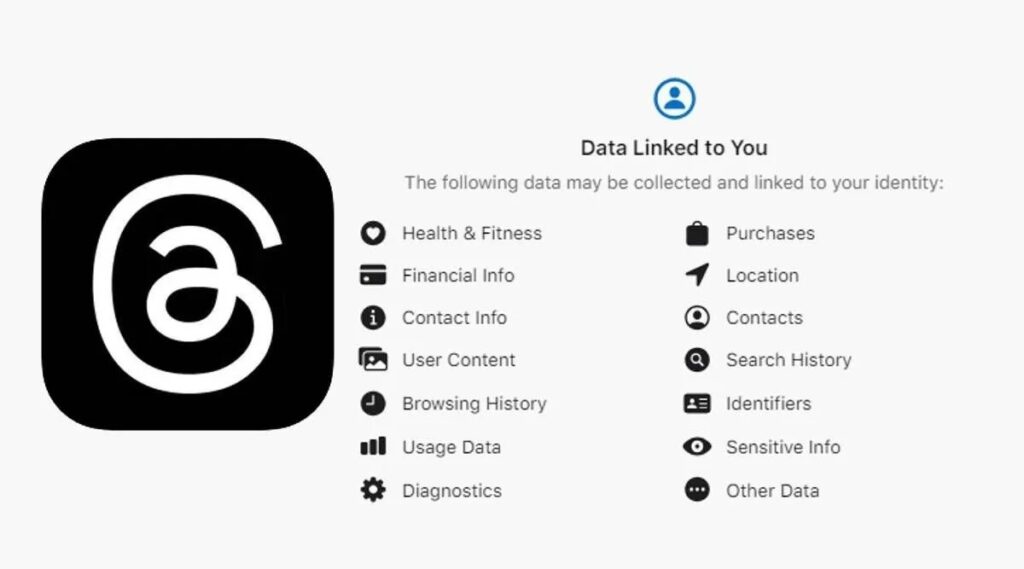
- Data collection (your behavior patterns are sold to advertisers)
- Behavioral prediction (algorithms learn to keep you engaged longer)
Key Statistic: The global digital advertising market reached $626 billion in 2024, with social media platforms capturing the largest share by monetizing user attention.
Unlike traditional economies where you exchange money for products, the attention extraction economy operates on a hidden transaction: You think you’re getting free entertainment, but you’re actually the product being sold to advertisers.
The Three Pillars of Attention Extraction
1. Capture – Get users onto the platform
2. Engage – Keep users scrolling as long as possible
3. Monetize – Convert attention into advertising revenue
Tech companies employ armies of engineers, psychologists, and UX designers whose sole job is perfecting this three-step system. Their goal? Maximize what industry insiders call “time on site” or “engagement metrics.”
Your smartphone isn’t just a communication device—it’s a finely-tuned attention extraction machine.
The Psychology Behind Smartphone Addiction: Your Brain on Social Media
Your smartphone addiction isn’t a character flaw. It’s neuroscience.
Tech platforms exploit the same psychological mechanisms that make slot machines addictive. Here’s how they hack your brain’s reward system:
Variable Reward Systems: The Slot Machine Effect
Every time you check your phone, you’re pulling a digital slot machine lever.
How it works:
- You pull: Check your phone
- You might win big: An exciting message or viral post
- You might win small: A mundane notification
- You might lose: Nothing new
This unpredictability is precisely what makes it addictive. Neuroscientist Robert Sapolsky found that dopamine neurons fire most intensely not when we receive a reward, but when we anticipate a potentially variable reward.
Your brain releases dopamine—the “feel-good” neurotransmitter—every time you reach for your phone, hoping for something interesting. Over time, this creates a dopamine addiction loop:
- Feel bored or anxious
- Check phone for dopamine hit
- Get temporary relief
- Return to baseline (or lower)
- Repeat
Scientific Insight: Research from the University of California found that smartphone users experience the same dopamine spikes as gambling addicts, with similar patterns of compulsive behavior.
The Notification Trap: Engineered Interruption
That little red dot. That buzz. That ping. Each notification is carefully engineered to trigger your curiosity reflex.
Notification psychology:
- Red color – Signals urgency and importance (borrowed from warning signs)
- Numbers – Create completionist anxiety (“I have 12 unread messages”)
- Sounds – Condition Pavlovian responses (you respond automatically)
- Timing – Delivered when you’re most likely to engage
Apps like Instagram and Facebook use machine learning algorithms to determine the optimal notification timing—when you’re most vulnerable to engagement.
Infinite Scroll: The End of Natural Stopping Points
Remember when websites had pages? When you’d reach the bottom and had to click “next”?
That tiny bit of friction—that moment of decision—has been deliberately eliminated.
The infinite scroll strategy:
- Removes natural stopping points
- Eliminates decision-making moments
- Creates “flow state” that bypasses conscious control
- One video becomes ten becomes fifty
This design pattern was pioneered by Aza Raskin (who later publicly apologized for creating it), and it’s now ubiquitous across social media platforms. It’s responsible for consuming billions of hours of human attention daily.
Social Comparison and FOMO: The Emotional Hooks
Social media platforms exploit fundamental human psychology:
Fear of Missing Out (FOMO)
- Constant stream of others’ highlight reels
- Creates anxiety about being left out
- Compels you to check “just in case”
Social Validation Addiction
- Likes and comments trigger social reward centers
- Each interaction reinforces posting behavior
- Creates dependency on external validation
A 2023 study from Harvard University found that receiving social media likes activates the same brain regions as eating chocolate or winning money—the nucleus accumbens, your brain’s reward center.
How Tech Companies Design Addictive Apps: Inside the Engagement Lab
Behind your favorite apps is a sophisticated science of behavioral engineering. Here’s what’s happening behind the scenes:
A/B Testing Your Brain
Tech companies constantly run experiments on you—often without your knowledge.
What they test:
- Button colors and placement
- Notification timing and frequency
- Algorithmic feed ordering
- Content recommendation patterns
- Interface layouts and design elements
The scale: Facebook runs thousands of A/B tests simultaneously, showing different app versions to different users to measure which design choices maximize engagement time.
Every tap, scroll, and pause is measured. The version you’re using today isn’t just an app—it’s the evolutionary survivor of countless experiments designed to capture your attention.
Algorithmic Manipulation: The Filter Bubble
Your social media feed isn’t chronological anymore. It’s algorithmically curated to maximize your engagement time.
How algorithms choose what you see:
- Engagement prediction – Content likely to make you react
- Dwell time – Posts you’ll spend time viewing
- Emotional triggers – Content that provokes strong reactions
- Behavioral patterns – Based on your past interactions
Critical Finding: Internal Facebook research (leaked in 2021) revealed that their algorithm amplifies divisive content because outrage drives 5x more engagement than positive content.
Platforms optimize for engagement, not wellbeing. And increasingly, those two goals are in direct conflict.
The Illusion of Free: You’re Not the Customer
“If you’re not paying for the product, you are the product.”
These apps aren’t free out of generosity. They’re free because their business model requires massive scale—billions of users whose attention can be packaged and sold.
Your data’s journey:
- You interact with content (likes, shares, views, pauses)
- Platform builds behavioral profile (interests, vulnerabilities, patterns)
- Profile sold to advertisers (sometimes thousands of data points)
- You receive hyper-targeted ads (timed for maximum receptivity)
According to privacy researchers at MIT, Facebook has an average of 52,000 data points on each user. Google has even more.
You’re not casually browsing—you’re walking through the world’s most sophisticated, personalized shopping mall that rearranges itself in real-time based on your every glance.
Growth Hacking: Psychological Dark Patterns
Tech companies use what UX designers call “dark patterns“—interface design choices that manipulate users into actions they didn’t intend:
Common dark patterns:
- Confirmshaming – “No, I don’t want to improve my life” (guilt-based opt-outs)
- Infinite scroll – No natural stopping point
- Autoplay – Next video starts automatically
- Read receipts – Creates social pressure to respond
- Streaks – Daily login requirements (Snapchat popularized this)
- Limited time offers – False scarcity to drive engagement
These aren’t bugs. They’re features—carefully designed to keep you engaged longer than you intended.
The Real Cost of the Attention Economy: What You’re Actually Losing
The attention extraction economy doesn’t just cost time. It fragments your consciousness, drains your mental energy, and hijacks your decision-making.
Attention Residue: Why You Can’t Focus Anymore
Psychologist Sophie Leroy discovered a phenomenon called “attention residue”—when you switch tasks, part of your attention remains stuck on the previous activity.
The smartphone effect:
- Average person checks phone 96 times daily
- Each check creates attention residue
- Your focus is scattered across dozens of incomplete micro-tasks
- Cognitive capacity diminishes throughout the day
Research Finding: A study from the University of California, Irvine found that it takes an average of 23 minutes and 15 seconds to fully regain focus after a distraction.
When you check your phone during work, you’re not just losing those 30 seconds—you’re losing the next 23 minutes of productive focus.
Decision Fatigue: Death by a Thousand Notifications
Every notification represents a micro-decision:
- Do I check it?
- Do I respond?
- Do I engage?
Multiply this by hundreds of daily notifications, and you’re experiencing decision fatigue—the deteriorating quality of decisions after making many choices.
Consequences of decision fatigue:
- Reduced willpower for important decisions
- Increased impulsive behavior
- Lower quality work output
- Emotional exhaustion
Researchers estimate that the average person makes 35,000 decisions per day. Smartphones add thousands of unnecessary micro-decisions to that burden.
The Proximity Effect: Your Phone Doesn’t Need to Be On
Here’s the disturbing part: Your smartphone reduces cognitive capacity even when it’s turned off.
A 2017 study from the University of Texas found that:
- Participants with phones on their desks performed worse on cognitive tests
- Even with phones face-down and silent
- Just knowing the phone was present consumed mental resources
- Performance improved when phones were in another room
Your brain allocates a small but measurable amount of processing power to resisting the urge to check—constantly.
Mental Health Impacts: The Depression Connection
The attention economy’s effects extend beyond productivity into mental health:
Documented effects:
- Increased anxiety – Constant connectivity creates “always-on” stress
- Depression rates – Teen depression increased 60% from 2010-2019 (correlated with smartphone adoption)
- Sleep disruption – Blue light and engagement suppress melatonin
- Decreased life satisfaction – Social comparison creates perpetual inadequacy
A 2024 meta-analysis of 47 studies found a significant correlation between social media use exceeding 3 hours daily and increased rates of anxiety and depression.
The Opportunity Cost: What You’re Not Doing
Every hour spent scrolling is an hour not spent:
- Having meaningful conversations
- Developing deep skills
- Reading books
- Creating rather than consuming
- Being present with loved ones
- Thinking deeply about important questions
The average person spends 4.5 hours daily on their smartphone. That’s:
- 31.5 hours per week
- 1,642 hours per year
- 68 days annually (nearly 20% of your waking life)
What could you accomplish with an extra 68 days per year?
Proven Strategies to Reclaim Your Attention: Your Digital Detox Action Plan
Understanding the attention extraction economy is the first step. Here’s how to fight back with practical, evidence-based strategies:
Strategy 1: Add Friction to Addictive Apps
Make it harder to access apps that consume most of your time.
Tactical steps:
- Remove from home screen – Require searching to open
- Turn off all non-essential notifications – Eliminate interruptions
- Enable grayscale mode – Makes phone visually less appealing
- Use app timers – iOS Screen Time or Android Digital Wellbeing
- Delete and re-download – Daily friction for problem apps
Success Rate: Users who removed social media from their home screen reduced usage by an average of 42% according to digital wellbeing research.
Strategy 2: Implement Time Blocking for Phone Use
Instead of responding to notifications reactively, schedule specific phone-checking times.
The protocol:
- Morning check – 7:00 AM (15 minutes max)
- Midday check – 12:00 PM (15 minutes max)
- Evening check – 6:00 PM (30 minutes max)
- No checking – Between designated times
This transforms phone use from an interrupt-driven to an intentional activity.
Strategy 3: Create Phone-Free Zones and Times
Establish sacred spaces and times where phones are prohibited.
Recommended boundaries:
- Bedroom – No phones after 9 PM (use an alarm clock)
- Meals – All devices off the table
- First hour awake – No phone before morning routine
- Social gatherings – Phone stacking game (first to check pays)
- Deep work sessions – Phone in another room
A Stanford study found that keeping phones in another room during work increased productivity by 26%.
Strategy 4: Use the “Intention Question” Technique
Before opening any app, pause and ask:
“What am I hoping to get from this right now?”
If you don’t have a clear answer, you don’t need to open it.
This simple pause activates your prefrontal cortex (rational decision-making) instead of your limbic system (automatic responses).
Strategy 5: Replace the Habit Loop
You can’t delete a habit—you can only replace it.
The habit loop:
- Cue – Boredom, waiting, anxiety
- Routine – Check phone
- Reward – Temporary stimulation
New loop:
- Cue – Same triggers
- Routine – Deep breathing, observation, conversation
- Reward – Present-moment awareness
Alternatives to scrolling:
- Carry a physical book
- Practice 4-7-8 breathing
- Observe your environment
- Strike up conversations
- Let your mind wander (embrace boredom)
Strategy 6: Embrace Strategic Boredom
Boredom isn’t something to eliminate—it’s essential for creativity, problem-solving, and emotional processing.
Benefits of boredom:
- Activates the brain’s default mode network (where creativity happens)
- Allows memory consolidation
- Enables emotional processing
- Sparks novel connections between ideas
Historically, boredom has been the birthplace of humanity’s greatest innovations. We’ve largely eradicated it—and our creativity suffers.
Strategy 7: Try the Dumb Phone Experiment
For some, the ultimate solution is switching to a minimalist phone.
Options:
- Light Phone – Calls, texts, directions, music only
- Punkt Phone – Swiss design, basic functions
- Nokia 3310 (2017) – Retro with modern network support
- Hybrid approach – Dumb phone daily, smartphone for specific tasks
Reported benefits:
- 90% reduction in screen time
- Significant decrease in anxiety
- Increased present-moment awareness
- Better sleep quality
- More meaningful conversations
Drawbacks:
- Logistical challenges (no GPS, ride-sharing, mobile banking)
- Social friction (group chats, event coordination)
- Professional limitations (email, work apps)
The hybrid approach works best for most people—minimalist phone for daily use, tablet at home for complex tasks.
Strategy 8: Use Technology to Fight Technology
Ironically, apps can help you reduce phone use:
Recommended apps:
- Freedom – Blocks distracting websites and apps
- Forest – Gamifies staying off your phone (grows virtual trees)
- One Sec – Adds breathing exercise before opening apps
- Moment – Tracks phone use and provides insights
- News Feed Eradicator – Removes infinite scroll feeds
These tools add the friction that tech companies deliberately removed.
Strategy 9: Rebuild Your Attention Span
Your attention is a muscle that atrophies without exercise.
Training protocol:
- Read long-form content – Books, not articles
- Practice single-tasking – One activity at a time
- Meditation – Even 5 minutes daily improves focus
- Pomodoro Technique – 25-minute focused work sessions
- Deep work blocks – 90-120 minute uninterrupted sessions
Research shows attention span can be rebuilt in 4-6 weeks with consistent practice.
Strategy 10: Understand Your Vulnerability Windows
You’re more susceptible to phone checking during:
- Transitions – Between activities
- Waiting – In lines, at appointments
- Emotional discomfort – Anxiety, boredom, loneliness
- Fatigue – Decision-making is impaired when tired
Plan ahead:
- Carry alternatives (book, journal, podcast queued up)
- Identify your triggers
- Create if-then plans (“If I’m waiting, then I’ll observe my surroundings”)
The attention extraction economy will continue extracting as long as you allow it. But with awareness, intention, and strategic action, you can reclaim your focus, your time, and your mental freedom.
Your attention is finite. Your time is limited. Every moment spent scrolling is a moment not spent on something that truly matters.
The question isn’t whether technology is good or bad. The question is: Are you using your technology, or is it using you?
~Rushen Wickramaratne